

Learning to play “Golden Hour” by JVKE on piano or guitar opens up a world of musical understanding. This beloved song has captured hearts worldwide with its dreamy melody and emotional depth. For self-learners, understanding the chord progressions and harmonic structure provides valuable insight into contemporary pop music composition.
This guide breaks down the essential elements of “Golden Hour” sheet music. Additionally, it offers practical tips for mastering the chords without formal training. Whether you’re a beginner or intermediate player, this analysis will help you play the song confidently.
Understanding the Key and Tempo
“Golden Hour” is written in the key of G major. This key signature contains one sharp, which is F sharp. The song maintains a moderate tempo of approximately 90 beats per minute, creating its signature relaxed, dreamy atmosphere.
The choice of G major makes this song accessible for beginners. Therefore, self-learners can practice without encountering overly complex fingerings. The key also allows for rich, resonant tones on both piano and guitar.
Moreover, the tempo gives players time to transition between chords smoothly. This slower pace is ideal for those still developing their muscle memory and coordination.
Main Chord Progression Breakdown
The verse section follows a simple yet effective four-chord progression. The primary chords are G major, D major, E minor, and C major. This progression repeats throughout most of the song, making it highly approachable for self-learners.
The G major chord serves as the tonic, establishing the home base of the song. Next, the D major chord functions as the dominant, creating forward momentum. The E minor adds an emotional, introspective quality. Finally, the C major chord provides resolution before returning to G major.
This I-V-vi-IV progression is extremely common in pop music. Consequently, learning it here will benefit you across countless other songs. Many popular tracks use this exact sequence because it naturally pleases the ear.
Chord Voicings for Piano Players
Piano players should focus on proper hand positioning for smooth transitions. The right hand typically plays the melody while the left hand handles the chord accompaniment. However, beginners can start by playing block chords with both hands together.
For the G major chord, play G-B-D. The D major chord uses D-F sharp-A. E minor requires E-G-B, and C major needs C-E-G. These basic triads form the foundation of the entire piece.
Additionally, intermediate players can experiment with inversions to create smoother voice leading. For instance, playing the C major chord as E-G-C in the left hand connects more naturally to the G major chord that follows. This technique reduces hand movement and creates a more professional sound.
Guitar Chord Shapes and Fingerings
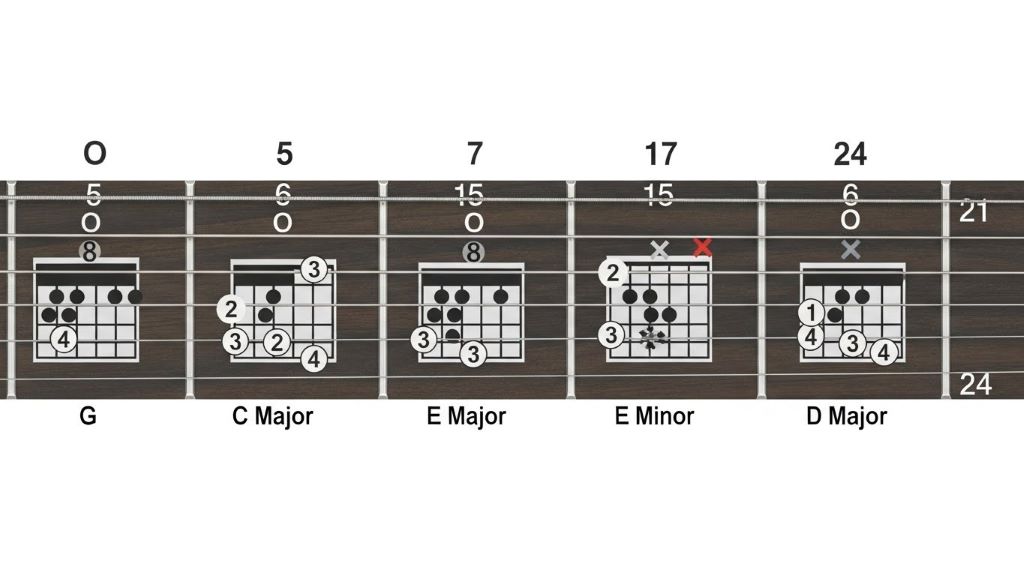
Guitar players will find “Golden Hour” comfortable in standard tuning. The open chord shapes in G major make this song particularly beginner-friendly. Each chord can be played using common open positions found in most beginner guitar books.
The G major chord uses fingers on the third fret of the low E string, second fret of the A string, and third fret of the high E string. D major requires the second fret on the G string, third fret on the B string, and second fret on the high E string. E minor is one of the easiest chords, using only the second fret on the A and D strings.
Furthermore, C major completes the progression with fingers on the third fret of the A string, second fret of the D string, and first fret of the B string. Practice transitioning between these shapes slowly at first. Subsequently, increase your speed as muscle memory develops.
Rhythm Patterns and Strumming Techniques
The rhythmic feel of “Golden Hour” contributes significantly to its dreamy quality. Piano players should use a gentle, rolling pattern that emphasizes the first and third beats of each measure. This creates the song’s signature flowing quality.
Guitar players can use a fingerpicking pattern or a soft strumming approach. A simple down-down-up-up-down-up pattern works well for strumming. Alternatively, fingerpicking the bass note followed by the higher strings creates a more delicate texture.
Moreover, dynamics play a crucial role in capturing the song’s emotional essence. Start softly and gradually build intensity during the chorus sections. This dynamic contrast keeps listeners engaged throughout the performance.
Analyzing the Chorus Section
The chorus maintains the same basic chord progression as the verse. However, the arrangement becomes fuller and more energetic. This section often features additional vocal harmonies and instrumental layers in the original recording.
Self-learners should focus on increasing their playing intensity during the chorus. This doesn’t necessarily mean playing louder. Instead, consider adding more rhythmic accents or fuller chord voicings.
Additionally, the chorus provides an excellent opportunity to experiment with embellishments. Try adding suspended chords or passing tones between the main chord changes. These small additions can elevate your performance significantly.
Bridge and Variation Sections
“Golden Hour” includes subtle variations that add interest throughout the song. The bridge section introduces slight melodic changes while maintaining the core harmonic structure. These variations prevent the song from becoming monotonous despite its repetitive chord progression.
Pay attention to how the melody interacts with the underlying chords. The relationship between melody notes and chord tones creates the song’s emotional impact. Therefore, understanding this connection helps self-learners appreciate music theory in practical application.
Furthermore, the bridge demonstrates how small changes can create significant emotional shifts. This lesson applies broadly to songwriting and arrangement skills beyond just playing this particular song.
Practice Strategies for Self Learners
Effective practice begins with mastering individual chord shapes before attempting transitions. Spend time getting comfortable with each chord’s fingering and sound. Use a metronome to develop steady timing from the beginning.
Break the song into small sections rather than trying to learn everything at once. Master the first four bars before moving forward. This methodical approach builds confidence and prevents frustration.
Additionally, recording yourself regularly helps identify areas needing improvement. Listen critically to your chord transitions, timing, and overall tone quality. According to Berklee College of Music, consistent self-assessment is crucial for musicians learning independently.
Moreover, playing along with the original recording helps develop your sense of timing and dynamics. Start at a slower tempo if needed, then gradually work up to the original speed.
Common Challenges and Solutions
Many self-learners struggle with smooth chord transitions initially. This challenge resolves with dedicated practice and proper technique. Focus on moving your fingers as a unit rather than one at a time.
Another common issue involves maintaining consistent rhythm while changing chords. Slow down your tempo until you can play perfectly, then gradually increase speed. Remember that accuracy matters more than speed, especially during early learning stages.
Hand fatigue can also discourage beginners. Take regular breaks during practice sessions to prevent strain. Additionally, ensure your posture and hand positioning follow proper technique guidelines to minimize unnecessary tension.
Expanding Your Musical Understanding
Learning “Golden Hour” provides a gateway to understanding broader musical concepts. The I-V-vi-IV progression appears in thousands of popular songs across multiple decades. Therefore, mastering it here opens doors to countless other pieces.
Consider exploring music theory resources to deepen your understanding of why these chords work together. Websites like MusicTheory.net offer free lessons covering chord construction, progressions, and harmonic analysis.
Furthermore, analyze other songs using similar progressions to reinforce your learning. This comparative approach helps internalize patterns and develops your musical intuition over time.
Conclusion
Analyzing the chord structure of “Golden Hour” offers self-learners an excellent introduction to contemporary pop music harmony. The song’s accessible key of G major and repetitive I-V-vi-IV progression make it ideal for beginners and intermediate players alike. By understanding the chord voicings, rhythm patterns, and structural variations, you can master this beautiful piece while developing transferable musical skills.
Remember that consistent practice with proper technique yields the best results. Take your time with each section, use quality resources for guidance, and don’t hesitate to slow down when needed. The journey of self-learning music is rewarding, and “Golden Hour” provides a perfect vehicle for developing your abilities as a musician.
Frequently Asked Questions
What key is “Golden Hour” played in?
“Golden Hour” is played in the key of G major, which contains one sharp (F sharp). This key makes the song accessible for beginners on both piano and guitar.
What is the chord progression for “Golden Hour”?
The main chord progression is G major, D major, E minor, and C major. This I-V-vi-IV progression repeats throughout the verse and chorus sections of the song.
Is “Golden Hour” difficult for beginner musicians?
No, “Golden Hour” is quite beginner-friendly. The chord progression uses basic major and minor triads, and the moderate tempo allows time for smooth transitions between chords.
Can I play “Golden Hour” on guitar using open chords?
Yes, all the chords in “Golden Hour” can be played using standard open chord shapes in the first position. This makes it ideal for guitarists who are still learning barre chords.
How long does it take to learn “Golden Hour” as a self-learner?
The timeline varies by individual, but most beginners can learn the basic chord progression within a few weeks of consistent practice. Mastering the dynamics and embellishments may take additional time.
Related Topics:
Top 10 Music Genres Dominating 2025: What’s Shaping the Soundscape


